|
Cite this article as: Winter H, van den Engel NK, Rusan M, Schupp N, Poehlein CH, Hu HM, Hatz RA, Urba WJ, Jauch KW, Fox BA, Rüttinger D. Active-specific immunotherapy for non-small cell lung cancer. J Thorac Dis 2011;3:105-114. DOI: 10.3978/j.issn.2072-1439.2010.12.06
Review Article
Active-specific immunotherapy for non-small cell lung cancer
Hauke Winter1*, Natasja K. van den Engel1*, Margareta Rusan1, Nina Schupp1, Christian H. Poehlein2, Hong-Ming Hu3,5, Rudolf A. Hatz1, Walter J. Urba3,4, Karl-Walter Jauch1, Bernard A. Fox4,6, Dominik Rüttinger1,7
1Department of Surgery-Campus Grosshadern, Thoracic Surgery Center Munich, Laboratory of Clinical and Experimental Tumor Immunology, Ludwig-Maximilians-University, Munich, Germany; 2Dendreon Corp., Seattle, WA, USA; 3Laboratory of Cancer Immunobiology, Robert W. Franz Cancer Research Center, Earle A. Chiles Research Institute, Providence Cancer Center, Portland, Oregon, USA; 4Laboratory of Molecular and Tumor Immunology, Robert W. Franz Cancer Research Center, Earle A. Chiles Research Institute, Providence Cancer Center, Portland, Oregon, USA; 5Department of Radiation Oncology, and OHSU Cancer Institute, Oregon Health and Science University, Portland, Oregon, USA; 6Molecular Microbiology and Immunology, and OHSU Cancer Institute, Oregon Health and Science University, Portland, Oregon, USA; 7Micromet AG, Munich, Germany
Correspondence: Dominik Rüttinger, MD, PhD, FACS, Department of Surgery-Campus Grosshadern, Thoracic Surgery Center Munich, Laboratory of Clinical and Experimental Tumor Immunology, Ludwig-Maximilians-University Munich, Marchioninistrasse 15, 81377 Munich, Germany. Tel: +49-(0)89-7095-2790; Fax; +49-(0)89-7095-8893. Email: dominik.ruettinger@med.uni-muenchen.de.
|
|
Therapeutic lung cancer vaccines
In contrast to prophylactic vaccination, which is employed
against infectious diseases or cancers associated with viral
infection (cervical cancer, hepatocellular carcinoma), the
only relevant vaccination strategy for cancer patients must be
therapeutic. Generally, cancer vaccines incorporate a source
of tumor antigens combined with some type of “adjuvant”.
Vaccine adjuvants are components that potentiate the immune
response to an antigen and/or modulate it towards the desired
immune responses (also referred to as “immune potentiators”
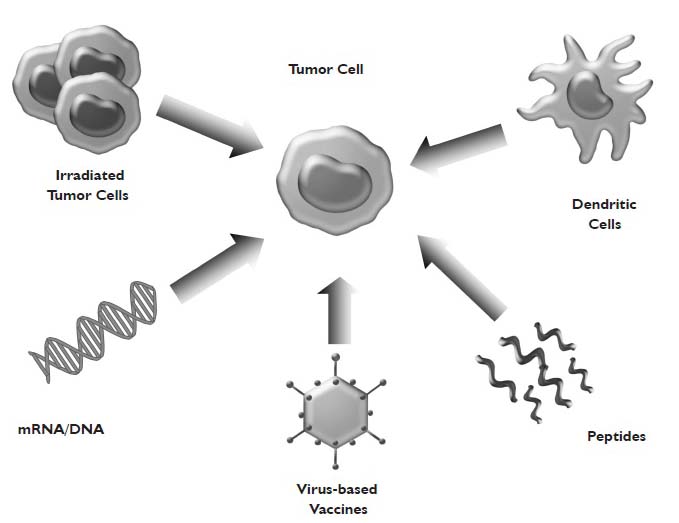
or “immunomodulators”). Sources of tumor-associated antigens
include whole autologous or allogeneic tumor cells, lysates
of tumor cells, defined proteins, specific peptide epitopes or
mRNA/DNA encoding for relevant antigens ( Fig 1). Most likely
due to the heterogeneous histology of lung cancers, the relevant
immunologically dominant antigens are not known; however,
there has been progress in this area (e.g. MUC-1, MAGE-3).
Therefore, the use of autologous tumor cells might be particularly
suitable for vaccination strategies in lung cancer, because no
prior knowledge of specific tumor antigens is necessary and
the induced immunity may not be confined to a single, specific antigen that could be downregulated by the tumor. However,
using defined antigens such as e.g. specific peptide epitopes, may
allow for easier monitoring of the resulting immune response
and may facilitate the understanding of the interplay between a
systemic immune response and anti-tumor activity of a specific
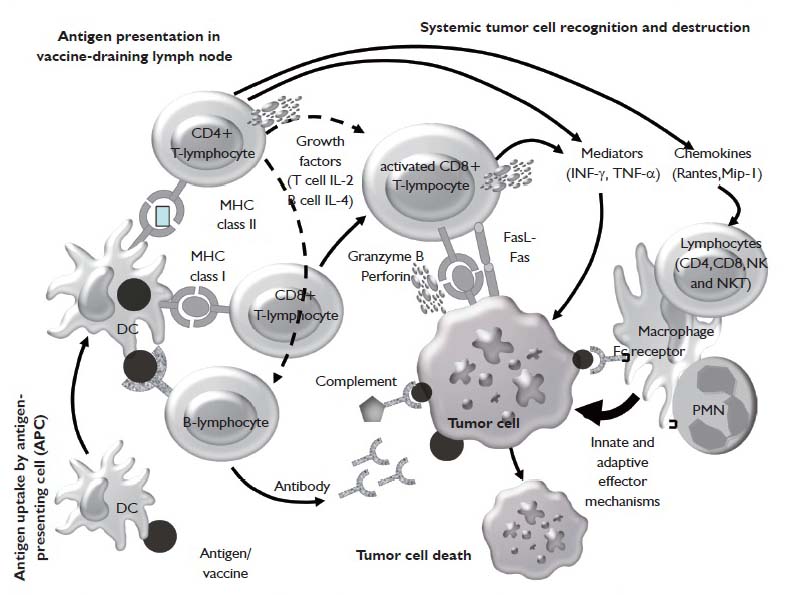
lung cancer vaccine. Fig 2 illustrates the proposed mechanism
of action of therapeutic cancer vaccines in order to induce a
systemic immune response against relevant tumor rejection
antigens. The following paragraphs review the most prominent
vaccination approaches in lung cancer ranging from non-specific
immune stimulation to combination therapies.
Non-specific vaccine approaches
The best known non-specific vaccine approach for NSCLC
is a preparation of killed Mycobacterium vaccae (SRL172)
in combination with systemic chemotherapy. With this
strategy, the non-specific immune stimulation is supposed to
enhance recognition of tumor antigens that are released by
chemotherapy-induced tumor destruction. After a small phase
II study with 20 previously untreated NSCLC patients produced
promising results ( 11), a phase III randomized trial was initiated.
With almost 200 advanced NSCLC patients in the vaccination
cohort, this trial failed to demonstrate a survival improvement
for vaccination and chemotherapy compared to chemotherapy
(mitomycin-C, vinblastine and cisplatin or carboplatin) alone
( 12). Improved quality of life was found in patients randomized
to vaccine plus chemotherapy and retrospective analyses revealed
a significant increase in survival in adenocarcinoma patients that
received more than 2 injections of SRL172. However, only 30
patients (14%) received one or more SRL172 injections after
the treatment phase, i.e. 63% of patients did not receive further
injections after the end of the 15-week treatment phase ( 12, 13).
Here, the natural history of different NSCLC histologies, i.e.
less aggressive tumors enable patients to receive more treatment
without documented progressive disease, may contribute to
differences in these retrospective analyses.
GVAX
The genetic modification of autologous tumor cells to secrete
immunomodulatory cytokines has been shown to induce
antitumor immunity in a number of preclinical models. Of these
cytokines, GM-CSF has demonstrated the greatest induction
of antitumor immunity ( 14). Two early phase clinical trials
using GM-CSF-secreting, autologous tumor cells (GVAX) in
patients with NSCLC have revealed encouraging preliminary
results. Salgia and coworkers reported on safety and feasibility
of this approach in 33 advanced NSCLC patients; the most
common toxicities were local injection site reactions and flulike
symptoms. A mixed response in one patient and long recurrence-free intervals in two other patients following isolated
metastasectomy were observed ( 15). In another phase I/II trial
involving patients with early-stage (n=10) and advanced-stage
(n=33) NSCLC, using the GVAX platform, autologous tumor
cells were transduced with GM-CSF through an adenoviral
vector (Ad-GM) and administered as a vaccine ( 16). Seventyeight
percent of patients developed antibody reactivity against
allogeneic NSCLC cell lines. Three durable complete responses
were observed. Interestingly, two of these responses were seen in
patients with bronchoalveolar carcinoma. Subset analyses in this
trial demonstrated a correlation between the amount of GMCSF
secreted by the vaccine and survival.
In an effort to have high GM-CSF secretion at a constant
level, autologous NSCLC cells were mixed with an allogeneic
GM-CSF-secreting cell line (K562 cells) (“bystander” GVAX).
The Phase I/II trial of this vaccine failed, however, to produce
objective tumor responses in 49 patients despite significant
increased GM-CSF secretion ( 17). While the reason for the
failure remains unknown, the significant increase in GM-CSF secretion by the “bystander” GVAX (25-fold higher than the
autologous vaccine) may have had a negative effect. In this
context, Serafini and coworkers have reported, that tumor
vaccines that secrete high levels of GM-CSF induce myeloid
suppressor cells that, in turn, inhibit anti-tumor immunity ( 18).
Currently, there are no ongoing clinical studies in lung cancer
using the GVAX vaccine platform.
MUC1 vaccines
Mucin-1 (MUC1) is a highly glycosylated type 1 transmembrane
protein with a molecular weight of 200 kD that is expressed on
the cell surface of many common adenocarcinomas, including
lung cancer. Because of its involvement in cell-cell interaction
between malignant and endothelial cells, MUC1-targeted
strategies may be useful in preventing metastatic spread of
tumor cells in addition to mediating direct anti-tumor effects.
MUC1 has been targeted using a variety of approaches including
dendritic cells (DC), recombinant vaccinia virus-expressing MUC1, MUC1 peptide, antibody-based strategies, and liposomal
delivery of MUC1 ( 19, 20).
A phase I study using a vaccine consisting of a modified
vaccinia virus (Ankara) expressing human MUC1, which also
contains a coding sequence for human IL-2 (MVA-MUC1-IL2),
reported a safe toxicity profile and some clinical activity ( 19).
A subsequent multicenter phase II trial of this vaccine, called
TG4010, investigated the combination of TG4010 with firstline
chemotherapy in patients with stage IIIB/IV NSCLC ( 21).
TG4010 was either combined upfront with cisplatin/vinorelbine
or administered as single-agent until disease progression and
then followed by TG4010 and cisplatin/vinorelbine. Sixty-five
patients were enrolled, 44 in the combination arm and 21 in the
sequential arm. In the combination arm, the objective response
rate was 29.5%. In the sequential arm, two patients experienced
stable disease lasting more than 6 months with single-agent TG4010; in the subsequent combination part, one complete
and one partial response were observed in 14 patients (14.3%).
The 1-year survival rates were 53% and 60% for the combination
and sequential groups, respectively. TG4010 was well tolerated
with mild to moderate injection site reactions and constitutional
symptoms being the most frequent adverse events. In a
subsequent phase IIB study, patients were treated with cisplatin/
gemcitabine with or without TG4010 administered weekly
for 6 weeks and then every 3 weeks until disease progression.
Seventy-four patients were included in each treatment arm. The
primary endpoint of this study was met with progression-free
survival rates at 6 months of 44% in the combination arm and
35% in the chemotherapy alone group. Response rates were 43%
and 27%, respectively. Interestingly, patients with normal levels
of lymphocytes and an activated natural killer cell phenotype
at baseline experienced a longer survival for TG4010 plus
chemotherapy but not for chemotherapy alone ( 22). A pivotal
phase IIB/III study of TG4010 in combination with first-line
therapy in patients with advanced MUC1 expressing NSCLC
and with normal levels of activated natural killer cells is expected
to start in Q4/2010.
The extracellular core peptide of MUC1 is targeted by a
liposomal vaccine named L-BLP25 (Stimuvax). In addition to
the MUC1 peptide, L-BLP25 consists of a monophosphoryl
lipid as an adjuvant and three other lipids to facilitate delivery
and uptake of the vaccine components by immune cells. A phase
I study with 17 patients suffering from NSCLC stages IIIB
and IV evaluated the safety and immunogenicity of L-BLP25
( 23). Two patients developed clinically insignificant grade 3
lymphopenia and non-hematological adverse events were mild
and self-limiting. No objective tumor responses were observed,
however, 5 out of 12 evaluable patients developed a MUC1-
specific T cell response. Based on the excellent overall safety
profile and the observation of a median OS was 14.6 months in
the higher of two dose cohorts, a multicenter phase IIB study
investigating the vaccine in NSCLC patients with stages IIIB
and IV disease was conducted. All patients had stable disease or
a clinical response after standard first-line chemotherapy, after
which patients were either vaccinated with L-BLP25 or received
best supportive care. Although OS did not reach statistical
significance, the survival of patients in the vaccine arm with stage
IIIB (locoregional disease) was improved at 3 years compared
to stage IIIB patients with malignant pleural effusion and stage
IV patients with 48.6% and 26.7%, respectively ( 24, 25). Very
recently, the safety and clinical activity of a new formulation
of BLP25, which will be used in the phase III program, were
confirmed ( 26). An international, randomized, multicenter
phase III trial called START (Stimulating Targeted Antigenic
Response to NSCLC) for unresectable stage III NSCLC patients
with stable disease or better following first-line chemoradiation
is currently underway. This trial will enroll 1,322 patients and OS
will be the main endpoint.
MAGE-A3 protein vaccine
The melanoma-associated antigen (MAGE)-A gene family is of
particular interest as target for active-specific immunotherapy
since – as a so-called cancer testis antigen – it is expressed on
cancer cells but not normal tissue. MAGE-A3 is expressed
in about 30% - 50% of lung cancers depending on stage and
histological subtype and may be associated with poor prognosis
( 27). The successful induction of humoral and cellular immune
responses in patients with NSCLC following vaccination with
MAGE-3 with and without adjuvant chemotherapy was reported
in 2004 ( 28). Seventeen patients with no evidence of disease
following surgical resection were enrolled. Nine patients received
300μg of the MAGE-3 protein alone, whereas 8 patients were
treated with MAGE-3 combined with the adjuvant AS02B. In
the first cohort (no adjuvant), only one patient showed a MAGE-
3-specific CD4+ T cell response. In contrast, 4 patients in the
second cohort (MAGE-3 plus adjuvant) developed a CD4+ T
cell response against the MAGE-3 DP4-peptide. Based on these
results, a multinational phase II trial investigating the therapeutic
efficacy of the MAGE-3 vaccine in patients with resected
MAGE-3-positive stage IB/II NSCLC was performed. In this
placebo-controlled study, 182 patients (122 stage IB and 60
stage II MAGE-3-positive NSCLC) were vaccinated five times
at 3-week intervals following surgical resection of their tumors.
Final results presented at the 2007 ASCO annual meeting ( 29)
revealed a 27% disease-free survival improvement for vaccinated
compared to placebo-treated patients. No significant toxicities
were observed. Based on these results a large international,
multicenter phase III study (MAGRIT), in which 2,270 resected
MAGE-A3-positive patients will be randomized to either
vaccine or placebo, with disease-free survival being the primary
endpoint, is currently enrolling patients ( 30).
Belagenpumatucel (Lucanix)
Elevated levels of transforming growth factor (TGF)-β2 are
frequently linked to immunosuppression (counteracting NK cell
activity and suppressing dendritic cells) in lung cancer patients
and may be inversely correlated with prognosis in NSCLC ( 31).
Belagenpumatucel-L (Lucanix; NovaRx Corp., San Diego, USA)
is a non-viral, gene-modified allogeneic vaccine with potential
immunostimulatory and antineoplastic activities. It is prepared
by transfecting 4 different NSCLC cell lines with a plasmid
containing a TGF-β2 antisense transgene, expanding the cells,
and then irradiating them. Upon administration, this agent may
elicit a specific T cell response against host NSCLC cells. The
vaccine’s immunogenicity may be potentiated by suppression of
tumor TGF-β2 production by the antisense RNA expressed by the vaccine plasmid TGF-β2 antisense transgene.
Belagenpumatucel-L was first evaluated in a phase II clinical
trial involving 75 patients with NSCLC stages II-IV ( 32).
Patients received intradermal vaccine injections at 3 different
doses monthly or every other month up to a maximum of 16
injections. Treatments were well tolerated with no severe side
effects. A dose-related improvement in survival was noted in
patients who received at least 2.5 x 10⁷ cells/injection. A 15%
partial response rate was achieved in the 61 late-stage (IIIB and
IV) assessable patients. Within the same group of patients an
increase in cytokine production (interferon gamma, IL-6, IL-4)
was observed among clinical responders who also displayed an
elevated antibody response to vaccine HLA antigens.
Based on these data, a placebo-controlled phase III clinical
trial, called STOP, has been initiated; an estimated 700 patients
with stage III/IV NSCLC following front-line chemotherapy
will be recruited. Overall survival will be the primary endpoint.
Epidermal growth factor vaccine (EGF-rP64K/Montanide ISA
51)
To induce a systemic immune response against growth
factors and/or their receptors seems an obvious strategy in
fighting cancer because they are known to augment tumor
cell proliferation and invasion and have been shown to
be overexpressed in many solid malignancies where the
overexpression has been associated with a more aggressive course
of disease and poor survival ( 33). C-erb B-1 and c-erb B-2 are
the two growth factor receptor families that have been studied
most extensively. C-erb B-1 is better known under the name
HER1 or epidermal growth factor receptor (EGFR). An active
immunotherapeutic strategy was evaluated using a vaccine that
consists of human recombinant EGF linked to a recombinant
carrier protein from Neisseria meningitides and is administered
with Montanide ISA 51 ( 34). Two pilot clinical trials have been
conducted to assess safety and immunogenicity of the vaccine
and to optimize the adjuvant and treatment schedule. Pooled
data from both trials revealed that inclusion of Montanide ISA 51
lead to a greater percentage of antibody responses which, in turn,
correlated with better survival when compared to patients who
did not develop a good antibody response ( 35). Another phase I
trial evaluated the vaccine in 43 patients with advanced NSCLC
following front-line therapy ( 36). No major adverse events were
recorded. Thirty-nine percent of the patients developed a robust
antibody response against EGF with a median OS of 8.23 months
in all vaccinated patients. A pooled analysis of all these early
phase trials confirmed the survival benefit for the 83 patients
who had received the vaccine ( 37), which formed the basis
for a randomized (best supportive care (BSC) as comparator)
phase II clinical trial in 80 advanced NSCLC patients, who had
received first-line chemotherapy ( 38, 39). The median OS was
6.47 months in the treatment arm compared to 5.33 months in
the BSC group. Median OS for patients who developed a robust
antibody response against EGF was 11.7 months. A significant
positive correlation was found between antibody titer, EGFEGFR
binding inhibition, immunodominance of anti-EGF
antibodies, and survival. Currently, a phase II/III trial is on its
way in Malaysia looking to recruit 230 patients with advanced
NSCLC after first-line therapy.
Dendritic cell-based vaccines
Dendritic cells (DC) pulsed with different antigens have been
used to vaccinate lung cancer patients. In a phase I/II clinical
trial, 16 patients with NSCLC stages IA to IIIB were vaccinated
with DC loaded with apoptotic bodies of an allogeneic
NSCLC cell line overexpressing HER2/neu, MAGE-2 and
other tumor antigens, after receiving treatment with surgery,
chemoradiation or multimodality therapy ( 40). The autologous
DC were matured using DC/T cell-derived Maturation Factor
(DCTCMF). Six patients showed an antigen-specific response
following vaccination, however, the clinical outcome failed to
show a clear correlation with the induced immune responses.
In a continuation study in 14 NSCLC patients (stages I, II and
III) using an immature DC vaccine, Hirschowitz and co-workers
reported immunological responses in 4/7 stage III unresectable,
and 6/7 stage I/II surgically resected patients. One of seven
resected patients recurred and 4/7 stage III patients progressed;
3/5 patients with progressive disease showed no immunological
response ( 41). Recently, the same group reported early clinical
results using the DC vaccine 1650-G (which incorporates the
same antigens as in the earlier studies) in combination with
granulocyte/macrophage-colony stimulating factor (GM-CSF)
( 42).
Another DC-based vaccination approach used s.c./
intradermal injections of ex vivo generated dendritic cells
modified with a recombinant fowlpox vector encoding
carcinoembryonic antigen (CEA) and a triad of costimulatory
molecules (rF-CEA(6D)-TRICOM) ( 43). Although only very
few lung cancer patients were treated with this vaccine, potent
anti-CEA immune responses were observed. Further studies
using DC-based vaccines in NSCLC are currently underway.
Other vaccination strategies
Additional vaccines for lung cancer are currently being tested
in clinical trials, but a review including all strategies in clinical
development would go beyond the scope of this paper [earlier
phase clinical data recently reviewed in ( 44)]. However, we
believe a few approaches should be mentioned in brief because
of their promising early clinical results:
IDM-2101 vaccine (previously EP-2101), a multi-peptide vaccine containing 10 lung cancer epitopes (e.g. p53, CEA,
HER2/neu, MAGE-2/3) ( 45)
α(1,3)-Galactosyltransferase (agal), a vaccine made out
of 3 irradiated lung cancer cell lines gene-modified to express
xenotransplantation antigens by retroviral transduction with the
murine α-gal gene ( 46)
B7.1 vaccine, an allogeneic whole cell-based vaccine
expressing the co-stimulatory molecule B7.1 (CD80) ( 47)
Anti-idiotype vaccine using the monoclonal antibody
racotumomab (formerly known as 1E10), a vaccine targeting a
N-glycosyl (NGc) ganglioside ( 48).
Other strategies attempt to manipulate the host in order to
improve the results of vaccination ( 49). The combination of
immunotherapy and chemotherapy has been shown to augment
the immune response in both preclinical and human trials.
Recent preclinical studies suggest an even higher therapeutic
efficacy of cancer vaccines if the host was made lymphopenic and
reconstituted with autologous peripheral blood mononuclear
cells (PBMC) prior to vaccination ( 49). Dudley et al combined
the adoptive transfer of both CD4+ and CD8+ tumor-infiltrating
lymphocytes (in this case without vaccination) in patients with
metastatic melanoma with a non-myeloablative chemotherapy
regimen and observed impressive clinical response rates ( 50, 51).
Currently, clinical trials are ongoing that aim to transfer parts
of this strategy to the treatment of other solid tumors such
as lung cancer combining preparative chemotherapy with
adoptive transfer of peripheral blood T cells and vaccination.
In this strategy, patients receive immunomodulatory doses
of cyclophosphamide and fludarabine and a reinfusion of
autologous PBMC prior to therapeutic vaccination with
irradiated autologous tumor cells in combination with the
continuous infusion of GM-CSF at the vaccination site ( 52).
Table 1 summarizes recent positive clinical phase III trials
using therapeutic cancer vaccines and currently ongoing
randomized phase III trials in NSCLC including the clinicaltrials.
gov identifier as a reference.
|
|
Conclusion
Historically, lung cancer has been regarded as a nonimmunogenic
cancer. Hypotheses as to why active-specific
immunotherapeutic approaches to NSCLC have yielded
disappointing results range from ineffective priming of tumorspecific
T lymphocytes to physical or functional disabling of
immune effector cells by primary host and/or tumor-related
mechanisms. However, there is increasing evidence that NSCLC
and SCLC can evoke specific humoral and cellular antitumor
immune responses. Facilitated methodology for characterizing
antigen profiles in lung cancer may lead to customized
immunotherapy for this disease. Additionally, once molecular
analysis is able to determine more accurately which individuals
are at the highest risk of relapse after surgical resection,
immunotherapy trials may be more efficiently conducted in
a defined population with minimal residual disease in which
immunotherapy will be most likely to provide therapeutic
benefit. Finally, immunotherapeutic approaches in the treatment
of lung cancer will be used in concert with standard treatment
modalities or in combination with multiple immunotherapeutic
agents rather than as single-agent strategies.
|
Acknowledgements
Christian H. Poehlein, Hauke Winter and Dominik Rüttinger
were Chiles Foundation Visiting Fellows. The authors represent
the Munich NSCLC Vaccine Study Group.
|
|
References
- Jemal A, Siegel R, Xu J, Ward E. Cancer Statistics, 2010. CA Cancer J Clin
2010;60:277-300.[LinkOut]
- Thun MJ, Henley S J, Burns D, Jemal A, Shanks TG, Calle EE. Lung cancer
death rates in lifelong nonsmokers. J Natl Cancer Inst 2006;98:691-9.[LinkOut]
- Fossella F, Pereira JR, von Pawel J, Pluzanska A, Gorbounova V, Kaukel
E. Randomized, multinational, phase III study of docetaxel plus platinum
combinations versus vinorelbine plus cisplatin for advanced non-small-cell
lung cancer: the TAX 326 study group. J Clin Oncol 2003;21:3016-24.[LinkOut]
- Scagliotti GV, De Marinis F, Rinaldi M, Crinò L, Gridelli C, Ricci S, et al.
Phase III randomized trial comparing three platinum-based doublets in
advanced non-small-cell lung cancer. J Clin Oncol 2002;20:4285-91.[LinkOut]
- Schiller JH, Harrington D, Belani CP, Langer C, Sandler A, Krook J, et al.
Comparison of four chemotherapy regimens for advanced non-small-cell
lung cancer. N Engl J Med 2002;346:92-8.[LinkOut]
- Kantoff PW, Higano CS, Shore ND, Berger ER, Small EJ, Penson DF, et
al. Sipuleucel-T immunotherapy for castration-resistant prostate cancer. N
Engl J Med 2010;363:411-22.[LinkOut]
- Schuster SJ, Neelapu SS, Gause BL, Muggia FM, Gockerman JP, Sotomayor
EM, et al. Idiotype vaccine therapy (BiovaxID) in follicular lymphoma
in first complete remission: Phase III clinical trial results. J Clin Oncol
(Meeting Abstracts) 2009;s27:2.
- Schwartzentruber DJ, Lawson D, Richards J, Conry RM, Miller D,
Triesman J, et al. A phase III multi-institutional randomized study of
immunization with the gp100:209-217 (210M) peptide followed by highdose
IL-2 compared with high-dose IL-2 alone in patients with metastatic
melanoma. J Clin Oncol (Meeting Abstracts) 2009;s27:CRA9011.
- Rüttinger D, Winter H, van den Engel NK, Hatz R, Jauch K-W, Fox BA, et
al. Immunotherapy of cancer: key findings and commentary on the third
Tegernsee conference. Oncologist 2010;15:112-8.[LinkOut]
- Morse MA, Whelan M. A year of successful cancer vaccines points to a path
forward. Curr Opin Mol Ther 2010;12:11-3.[LinkOut]
- O’Brien ME, Saini A, Smith IE, Webb A, Gregory K, Mendes R, et al. A
randomized phase II study of SRL172 (Mycobacterium vaccae) combined
with chemotherapy in patients with advanced inoperable non-small-cell lung cancer and mesothelioma. Br J Cancer 2000;83:853-7.[LinkOut]
- O’Brien ME, Anderson H, Kaukel E, O’Byrne K, Pawlicki M, Von Pawel
J, et al. SRL172 (killed Mycobacterium vaccae) in addition to standard
chemotherapy improves quality of life without affecting survival, in patients
with advanced non-small-cell lung cancer: phase III results. Ann Oncol
2004;15:906-14.[LinkOut]
- Stanford JL, Stanford CA, O’Brien ME, Grange JM. Successful
immunotherapy with mycobacterium vaccae in the treatment of
adenocarcinoma of the lung. Eur J Cancer 2008;44:224-7.[LinkOut]
- Dranoff G, Jaffee E, Lazenbay A, Golumbek P, Levitsky H, Brose K, et
al. Vaccination with irradiated tumor cells engineered to secrete murine
granulocyte-macrophage colony-stimulating factor stimulates potent,
specific, and long-lasting anti-tumor immunity. Proc Natl Acad Sci USA
1993;90:3539-43.[LinkOut]
- Salgia R, Lynch T, Skarin A, Lucca J, Lynch C, Jung K, et al. Vaccination
with irradiated autologous tumor cells engineered to secrete granulocytemacrophage
colony-stimulating factor augments antitumor immunity in
some patients with metastatic non-small-cell lung carcinoma. J Clin Oncol
2003;21:624-30.[LinkOut]
- Nemunaitis J, Sterman D, Jablons D, Smith JW 2nd, Fox B, Maples P, et
al. Granulocyte-macrophage colony-stimulating factor gene-modified
autologous tumor vaccines in non-small-cell lung cancer. J Natl Cancer Inst
2004;96:326-31.[LinkOut]
- Nemunaitis J, Jahan T, Ross H, Sterman D, Richards D, Fox B, et al.
Phase I/II trial of autologous tumour mixed with an allogeneic GVAX
vaccine in advanced-stage non-small-cell lung cancer. Cancer Gene Ther
2006;13:555-62.[LinkOut]
- Serafini P, Carbley R, Noonan KA, Tan G, Bronte V, Borrello I. Highdose
granulocyte-macrophage colony-stimulating factor-producing
vaccines impair the immune response through the recruitment of myeloid
suppressor cells. Cancer Res 2004;64:6337-43.[LinkOut]
- Rochlitz C, Figlin R, Squiban P, Salzberg M, Pless M, Herrmann R, et al.
Phase I immunotherapy with a modified vaccinia virus (MVA) expressing
human MUC1 as antigen-specific immunotherapy in patients with MUC1-
positive advanced cancer. J Gene Med 2003;5:690-9.[LinkOut]
- Kontani K, Taguchi O, Ozaki Y, Hanaoka J, Sawai S, Inoue S, et al.
Dendritic cell vaccine immunotherapy of cancer targeting MUC1 mucin.
Int J Mol Med 2003;12:493-502.[LinkOut]
- Ramlau R, Quoix E, Rolski J, Pless M, Lena H, Lévy E, et al. A phase II
study of Tg4010 (Mva-Muc1-IL2) in association with chemotherapy
in patients with stage III/IV non-small cell lung cancer. J Thorac Oncol
2008;3:735-44.[LinkOut]
- Acres B, Quoix E, Ramlau R, Lacoste G, Marie Bastien B, Tavernaro A,
et al. Biomarkers associated with clinical outcome in advanced non-small
cell lung cancer patients treated with TG4010. J Clin Oncol (Meeting
Abstracts) 2009;s27:3027.
- Palmer M, Parker J, Modi S, Butts C, Smylie M, Meikle A, et al. Phase I
study of the BLP25 (MUC1 Peptide) liposomale vaccine for active specific
immunotherapy in stage IIIB/IV non-small-cell lung cancer. Clin Lung
Cancer 2001;3:49-57.[LinkOut]
- Butts C, Murray N, Maksymiuk A, Goss G, Marshall E, Soulières D, et al. Randomized Phase IIB trial of BLP25 liposome vaccine in stage IIIB and
IV non-small-cell lung cancer. J Clin Oncol 2005;23:6674-81.[LinkOut]
- Butts C, Maksymiuk A, Goss G, Soulieres D, Marshall E, Cormier Y, et al.
A mulit-centre phase IIB randomized controlled study of BLP25 liposome
vaccine (L-BLP25 or Stimuvax) for active specific immunotherapy of nonsmall
cell lung cancer (NSCLC): updated survival analysis: B1-01. J Thor
Oncol 2007;2:s332-3.[LinkOut]
- Butts C, Murray RN, Smith CJ, Ellis PM, Jasas K, Maksymiuk A, et al. A
multicenter open-label study to assess the safety of a new formulation of
BLP25 liposome vaccine in patients with unresectable stage III non-smallcell
lung cancer. Clin Lung Cancer 2010;11:391-5.[LinkOut]
- Sienel W, Varwerk C, Linder A, Kaiser D, Teschner M, Delire M, et
al. Melanoma associated antigen (MAGE)-A3 expression in stages I
and II non-small cell lung cancer: results of a multi-center study. Eur J
Cardiothorac Surg 2004;25:131-4.[LinkOut]
- Atanackovic D, Altorki NK, Stockert E, Williamson B, Jungbluth AA, Ritter
E, et al. Vaccine-induced CD4+ T cell responses to MAGE-3 protein in
lung cancer patients. J Immunol 2004;172:3289-96.[LinkOut]
- Vansteenkiste J, Zielinski M, Linder A, Dahabre J, Esteban E, Malinowski
W, et al. Final results of a multi-center, double-blind, randomized,
placebo-controlled phase II study to assess the efficacy of MAGE-A3
immunotherapeutic as adjuvant therapy in stage IB/II non-small cell lung
cancer (NSCLC). J Clin Oncol (Meeting Abstracts) 2007;s25:7554.
- Tyagi P, Mirakhur B. MAGRIT: the largest-ever phase III lung cancer trial
aims to establish a novel tumor-specific approach to therapy. Clin Lung
Cancer 2009;10:371-4.[LinkOut]
- Kong F, Jirtle RL, Huang DH, Clough RW, Anscher MS. Plasma
transforming growth factor-ß1 level before radiotherapy correlates with
long term outcome of patients with lung carcinoma. Cancer 1999;86:1712-
9.[LinkOut]
- Nemunaitis J, Dillman RO, Schwarzenberger PO, Senzer N, Cunningham
C, Cutler J, et al. Phase II study of belagenpumatucel-L, a transforming
growth factor beta-2 antisense gene-modified allogeneic tumor cell vaccine
in non-small-cell lung cancer. J Clin Oncol 2006;24:4721-30.[LinkOut]
- Reissmann PT, Koga H, Figlin RA, Holmes EC, Slamon DJ. Amplification
and overexpression of the cyclin D1 and epidermal growth factor receptor
genes in non-small cell lung cancer. Lung Cancer Study Group. J Cancer
Res Clin Oncol 1999;125:61-70.[LinkOut]
- Gonzalez G, Crombet T, Catala M, Mirabal V, Hernández JC, González Y,
et al. A novel cancer vaccine composed of human-recombinant epidermal
growth factor linked to a carrier protein: report of a pilot clinical trial. Ann
Oncol 1998;9:431-5.[LinkOut]
- Gonzalez G, Crombet T, Torres F, Catala M, Alfonso L, Osorio M, et al.
Epidermal growth factor-based cancer vaccine for non-small-cell lung
cancer therapy. Ann Oncol 2003;14:461-6.[LinkOut]
- Ramos TC, Vinageras E, Ferrer MC, Verdecia BG, Rupalé IL, Pérez LM, et
al. Treatment of NSCLC patients with an EGF-based cancer vaccine: report
of a Phase I trial. Cancer Biol Ther 2006;5:145-9.[LinkOut]
- Gonzalez G, Crombet T, Neninger E, Viada C, Lage A. Therapeutic
vaccination with epidermal growth factor (EGF) in advanced lung cancer:
Analysis of pooled data from three clinical trials. Hum Vaccin 2007;3:8-13.[LinkOut]
- Garcia B, Neninger E, de la Torre A, Leonard I, Martínez R, Viada C, et
al. Effective inhibition of the epidermal growth factor/epidermal growth
factor receptor binding by anti-epidermal growth factor antibodies is
related to better survival in advanced non-small-cell lung cancer patients
treated with the epidermal growth factor cancer vaccine. Clin Cancer Res
2008;14:840-6.[LinkOut]
- Neninger Vinageras E, de la Torre A, Osorio Rodriquez M, Catalá Ferrer M,
Bravo I, Mendoza del Pino M, et al. Phase II randomized controlled trial of
an epidermal growth factor vaccine in advanced non-small-cell lung cancer.
J Clin Oncol 2008;26:1452-8.[LinkOut]
- Hirschowitz EA, Foody T, Kryscio R, Dickson L, Sturgill J, Yannelli J, et
al. Autologous dendritic cell vaccines for non-small cell lung cancer. J Clin
Oncol 2004;22:2808-15.[LinkOut]
[LinkOut]
- Hirschowitz EA, Foody T, Hidalgo GE, Yannelli JR. Immunization of
NSCLC patients with antigen-pulsed immature autologous dendritic cells.
Lung Cancer 2007;57:365-72.[LinkOut]
- Hirschowitz EA, Mullins A, Prajapati D, Baeker T, Kloecker G, Foody T, et
al. Pilot study of 1650-G: A Simplified Cellular Vaccine for Lung Cancer. J
Thorac Oncol 2011;6:169-73.[LinkOut]
- Morse MA, Clay TM, Hobeika AC, Osada T, Khan S, Chui S, et al. Phase I
study of immunization with dendritic cells modified with fowlpox encoding
carcinoembryonic antigen and costimulatory molecules. Clin Cancer Res
2005;11:3017-24.[LinkOut]
- Kelly RJ, Gulley JL, Giaccone G. Targeting the immune system in nonsmall-
cell lung cancer: bridging the gap between promising concept and
therapeutic reality. Clin Lung Cancer 2010;11:228-37.[LinkOut]
- Barve M, Bender J, Senzer N, Cunningham C, Greco FA, McCune D, et
al. Induction of immune responses and clinical efficacy in a phase II trial
of IDM-2101, a 10-epitope cytotoxic T-lymphocyte vaccine, in metastatic
non-small-cell lung cancer. J Clin Oncol 2008;26:4418-25.[LinkOut]
- Morris JC, Vahanian N, Janik JE, Moses L, Tennant L, Pittaluga
S, et al. Phase I study of an antitumor vaccination using α-(1,3)
galactosyltransferase expressing allogeneic tumor cells in patients with
refractory or recurrent non-small cell lung cancer (NSCLC). J Clin Oncol
(Meeting Abstracts) 2005;s23:2586.
- Raez LE, Cassileth PA, Schlesselmann JJ, Sridhar K, Padmanabhan S,
Fisher EZ, et al. Allogeneic vaccination with a B7.1 HLA-A gene-modified
adenocarcinoma cell line in patients with advanced non-small-cell lung
cancer. J Clin Oncol 2004;22:2800-7.[LinkOut]
- Neninger E, Diaz RM, de la Torre A, Rives R, Díaz A, Saurez G, et al. Active
immunotherapy with 1E10 anti-idiotype vaccine in patients with small cell
lung cancer: report of a phase I trial. Cancer Biol Ther 2007;6:145-50.[LinkOut]
- Ma J, Poehlein CH, Jensen SM, LaCelle MG, Moudgil TM, Rüttinger D, et
al. Manipulating the host response to autologous tumor vaccines. Dev Biol
(Basel) 2004;116:93-107.[LinkOut]
- Dudl e y ME, Wunde r l i ch JR , Robbins PF, Yang JC, Hwu P,
Schwartzentruber DJ, et al. Cancer regression and autoimmunity in
patients after clonal repopulation with antitumor lymphocytes. Science
2002;298:850-4.[LinkOut]
- Dudley ME, Yang JC, Sherry R, Hughes MS, Royal R, Kammula U, et al.
Adoptive cell therapy for patients with metastatic melanoma: evaluation of
intensive myeloablative chemoradiation preparative regimens. J Clin Oncol
2008;26:5233-9.[LinkOut]
- Rüttinger D, van den Engel NK, Winter H, Schlemmer M, Pohla H,
Grützner S, et al. Adjuvant therapeutic vaccination in patients with
non-small cell lung cancer made lymphopenic and reconstituted with
autologous PBMC: first clinical experience and evidence of an immune
response. J Transl Med 2007;5:43.[LinkOut]
|
|